
Taiyo Yuden’s FY2027 Q1 (April–June 2026) results show a sharp recovery, led by MLCC segment profit up 53.5% year-over-year. Group revenue hit ¥938.97B ($3.94B RMB equivalent), +10.7% YoY, with operating profit at ¥48.18B, +53.3% YoY and operating margin rising to 5.1% (+1.4 ppts). Net income turned positive at ¥25.04B, reversing last year’s loss.
Capacitor revenue (MLCC core) reached ¥690.22B, +14.7% YoY and +7.9% QoQ – the fastest-growing segment. Book-to-bill for capacitors hit 1.72 (group 1.58), with orders surging 41% QoQ and backlog jumping 78%. AI servers, comms gear, and storage modules are driving demand for high-voltage, high-capacitance MLCCs, creating visible tight supply in premium tiers.
Inductor revenue: ¥159.34B, +7.4% YoY but only +1.5% QoQ, weighed by weak PC demand partly offset by AI infrastructure and automotive. Other components fell YoY and QoQ due to sluggish comms devices.
By end-market: IT infrastructure/industrial (AI servers) now accounts for 27% of revenue (rising), automotive 28% (down 2 ppts), comms 20%, PCs/storage 18%, wearables 7%.
Full-year guidance raised: Revenue now forecast at ¥4.24T, +19.3% YoY (10.4% above May forecast). Operating profit raised to ¥450B, +125% YoY. Capacitor full-year target lifted most – +25.7% YoY to ¥3.165T.
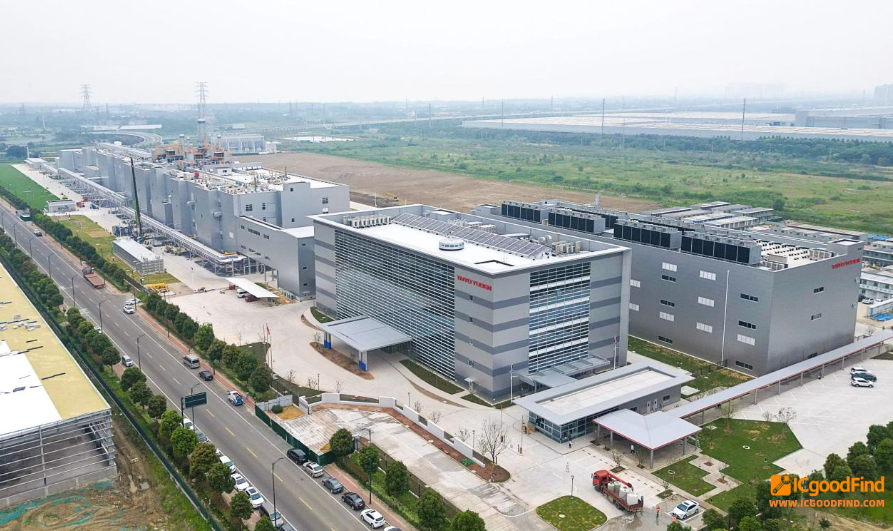
Why the upgrade: per-server MLCC content exceeds prior estimates, high-end product mix improves, price erosion slows, and some premium models see price hikes. Weak yen adds FX gains. Taiyo Yuden is accelerating its Malaysia MLCC fab to capture long-term AI demand.
For Q2 (July–Sep 2026), company guides +15–19% QoQ revenue growth, with capacitors +16–20% and inductors +17–21%. A five-year expansion plan through 2030 brings Malaysia capacity online in the back half, focused on AI-grade and automotive high-margin components. Low-end consumer MLCC capacity is being actively reduced.
ICgoodFind Take:
Book-to-bill 1.72 doesn't lie – high-end MLCC is the new bottleneck in AI supply chains. Taiyo Yuden is pivoting hard from consumer to server/auto, and margins have room to run. Procurement teams should lock in premium MLCC supply early – this shortage is structural, not seasonal.
